India With Kids | North India – Not What We Imagined
India was on our list, a “someday” destination for when the time was right. But we were also a little worried, even though some of us had been before: India with kids is a whole different story. The dirt, cows in the street, what will they eat, and how would our teenager, just back from a coming-of-age trip to Paris, connect with it… So, spoiler: in the end everyone fell in love with it, truly. Us too.
Our route: Delhi – Rishikesh – Dharamkot (Dharamsala), including an amazing trek up Triund – Naggar (near Manali) – Delhi.
So how do you travel India with kids?
There’s endless information about India and so many ways to travel it: different regions that each feel like a different country, a huge range of prices (from backpacker trips to fancy), never-ending options, and everyone who’s been will tell you about THE place you have to go. On this particular trip, now that we’re experienced and the kids are a bit older, we decided to plan a little less tightly than usual and let the trip lead us. Of course, within a general plan: a region that suits the weather, booking the first few nights, and research and advice to figure out what kind of trip would be right for us.
We set out to plan with a few ground rules:
- Accommodation: definitely not roughing it. We want to arrive in the evening at a pleasant, clean place to rest our heads, but still sleep in places where we’ll really experience India. Happy to pay a little more to feel comfortable (prices are much lower than in other destinations anyway), and to have hot water in the shower.
- Pace: we want to see and experience a lot, as we love to, but we also know that part of India’s magic is knowing how to stop and stay, without rushing from place to place (it wasn’t always easy for us… it takes the mind a while to adjust to this different rhythm).
- Effort level: we knew landing wouldn’t be easy for everyone (even Neta, who’d backpacked India years ago, needed time to adjust again), so we started with a pampering night at a hotel near the airport and booked the hotel in Rishikesh in advance, to make things easier and give each of the kids and family members time to find their own pace.
Delhi: a soft landing
After a lot of back and forth about the best way to start the trip, we realized we’d rather experience the busy Main Bazaar and Delhi’s heat at the end (a really good call in hindsight!). Straight from the airport we went to the lovely, pampering Andaz Delhi, by Hyatt, a perfect hotel for a soft landing, 5 minutes from the airport, with wonderful food and amazing hospitality. Just right for a first night.
From there we flew to Dehradun, and from there it’s half an hour by taxi to Rishikesh.
Rishikesh: hello, cows
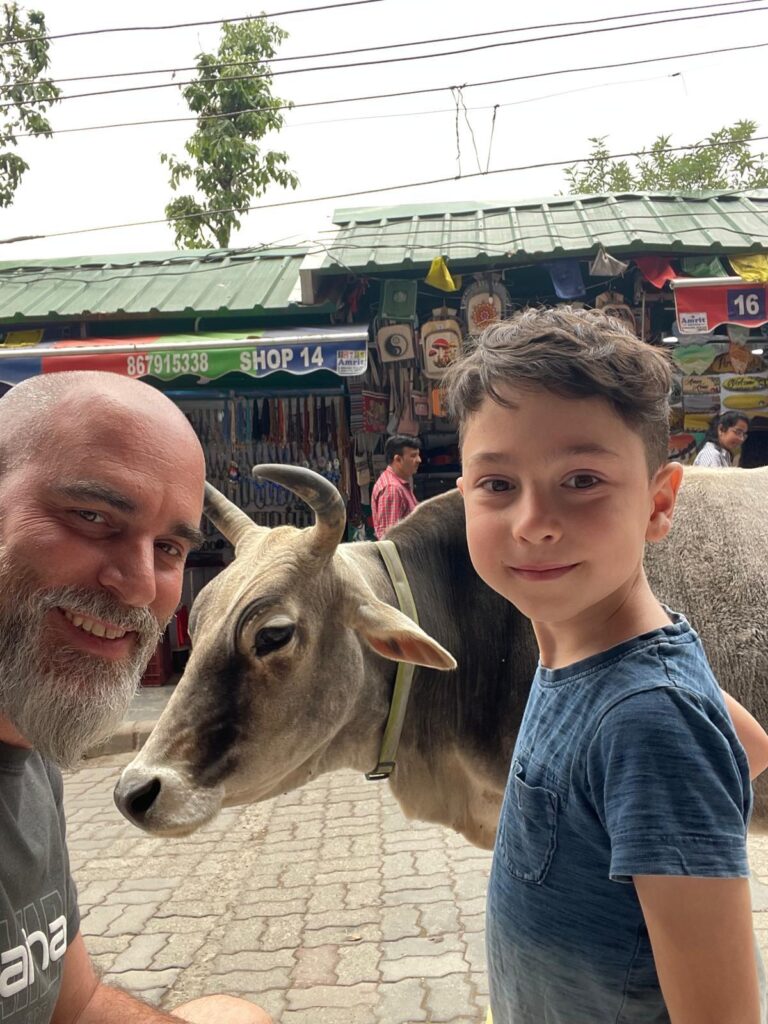
Full disclosure: the family is divided on whether Rishikesh was really the right place to start (Or is sure it was, Neta thinks it was a bit too tough for a start). Why? Because it’s a busy city, not the cleanest, spiritual, with the Ganges at its heart, and it has a wonderful magic that we might have experienced differently had we met it after two weeks in India. Still, it was lovely there, and a wonderful start to the journey.
Here too we looked for a soft-landing hotel, not a guesthouse, in a convenient and not-too-busy location, in Upper Tapovan: Pride Hotel And Resort Rishikesh. A perfectly decent hotel for an easy start in Rishikesh (you can of course find better, and India has every level; in this case we chose a hotel that balanced the India of the start of the trip with the joy of simplicity).
Or, on his first visit to India, fell in love with Rishikesh from the first moment. The chaos, perfect. The smells, the sights, the honking, it all just works, a kind of magic you can’t explain until you’re there… It took the rest of the family a little longer. India does have its initial shock, after all, but within two or three days it started to open up for everyone, each at their own pace.
Food, the Ganges and a cooking class
We went for dinner at the local restaurant everyone recommends, The 60’s Cafe – The Beatles, ordered the whole menu and waited. From the very first bite, like magic, the mood changed. We all felt like we were on another planet, including all the kids, even the ones who live on pizza and pasta… Something about the Indian spices and the food, simple but so spot-on, got to everyone. That’s when the trip began.
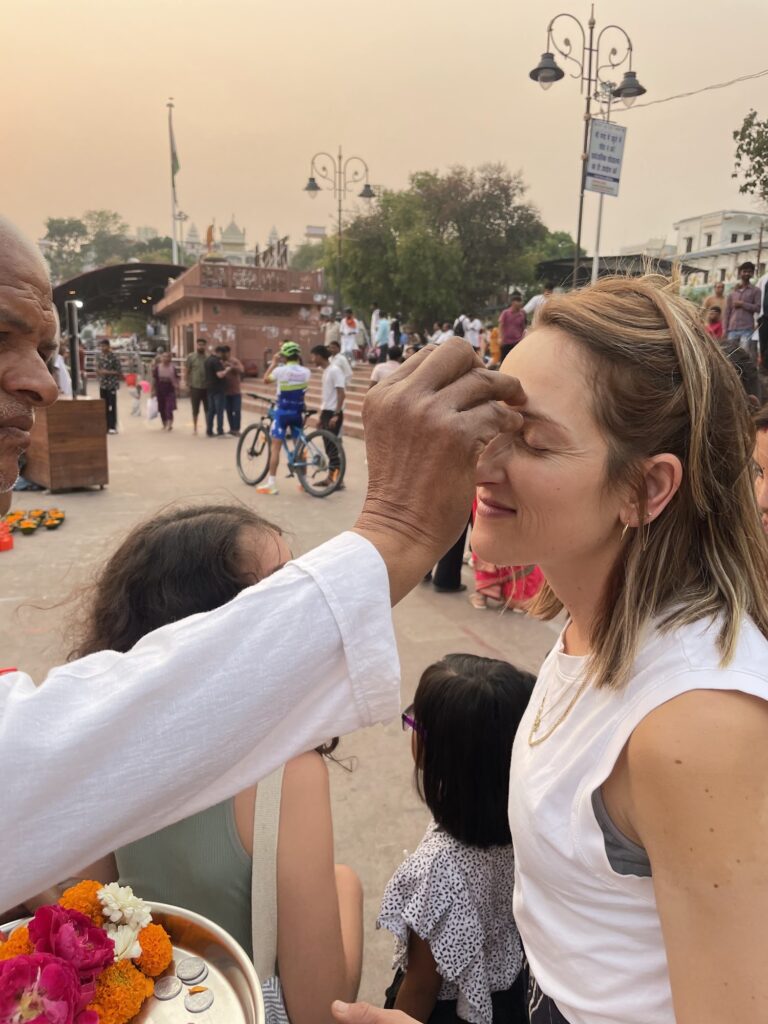
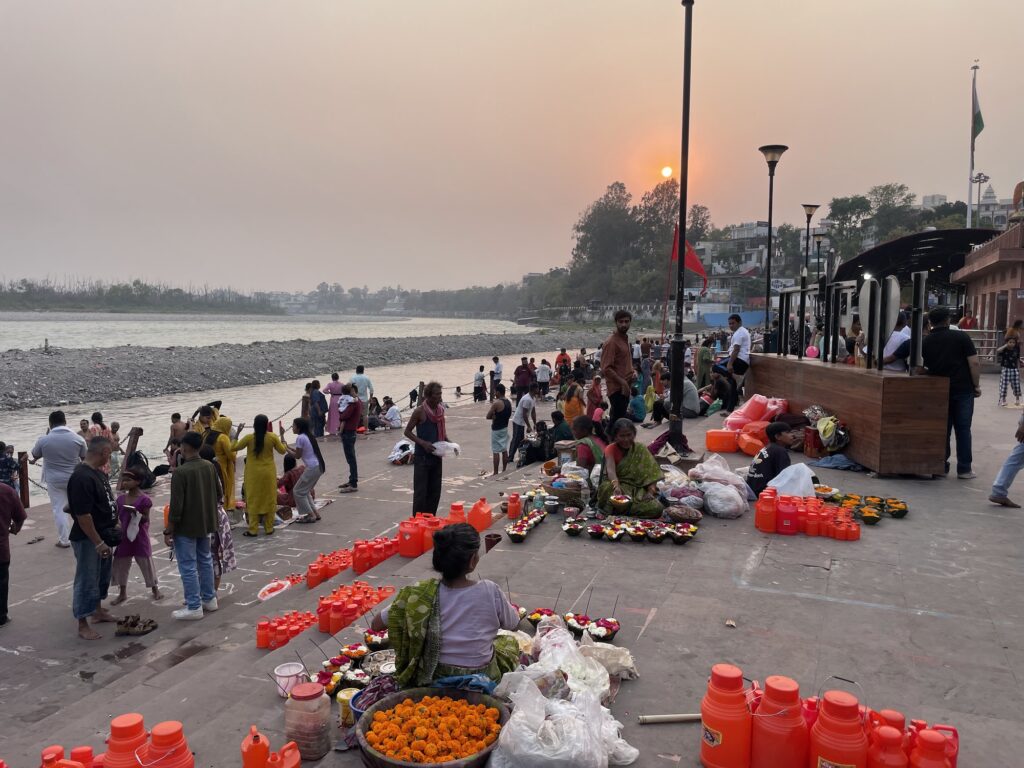
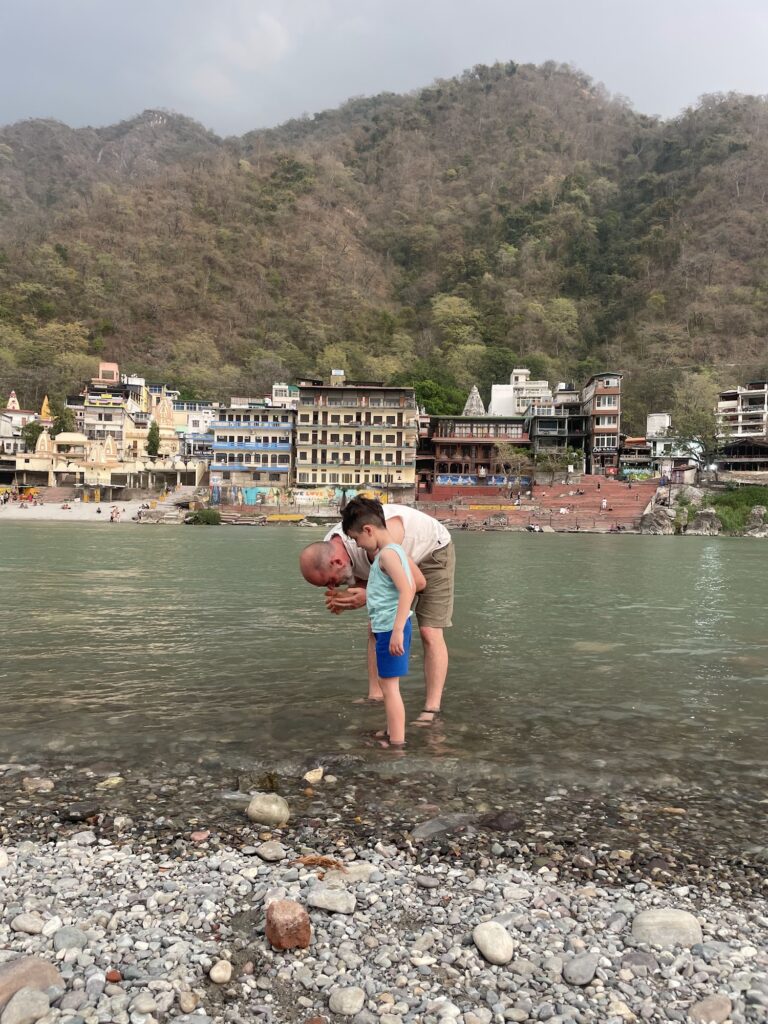
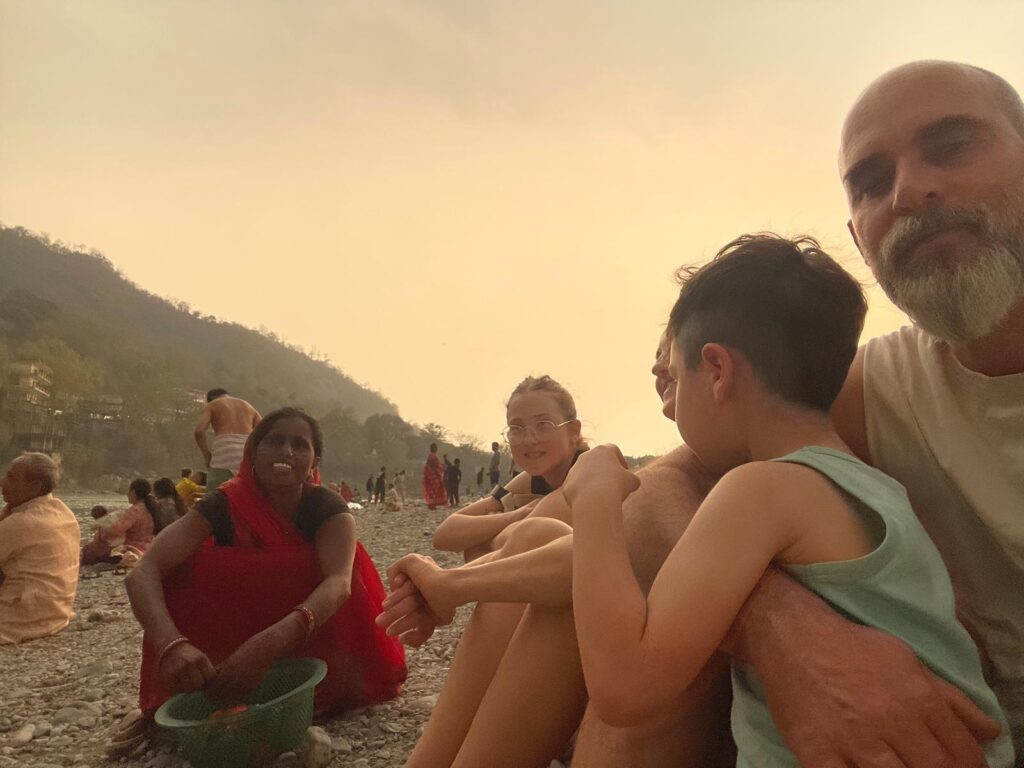
In Rishikesh (Tapovan) we mostly wandered around all day, dipped in the icy Ganges (very clean in this area, of course), walked over to Lakshman Jhula, hours of drifting between little shops, cafés and restaurants.
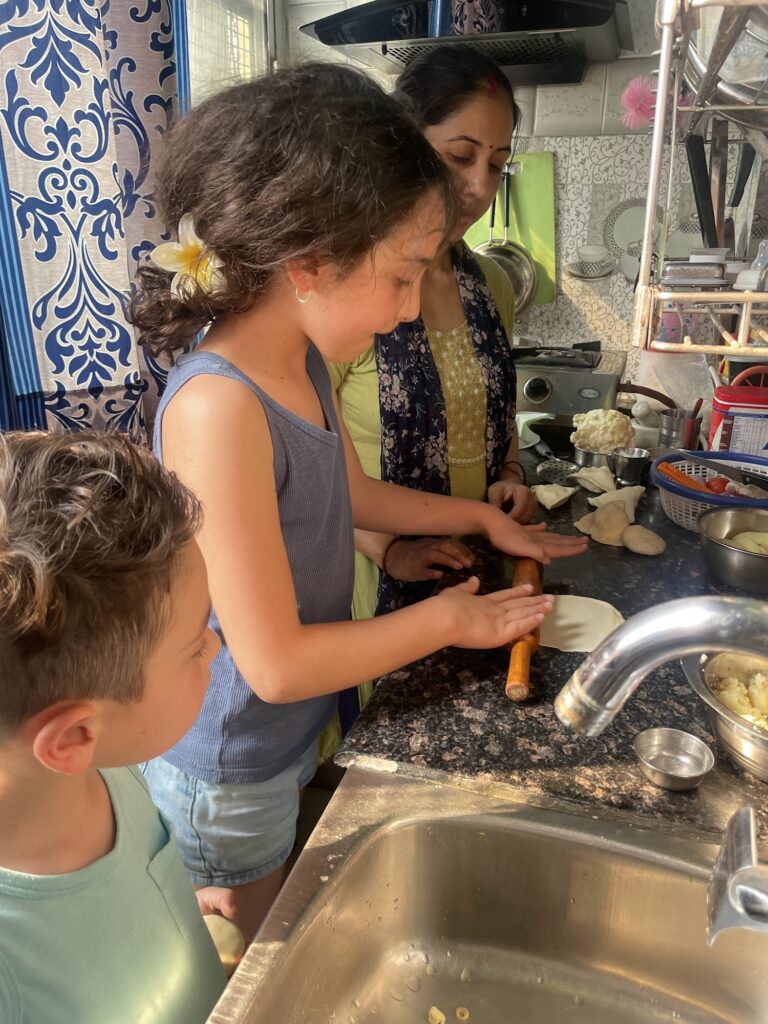
We did a magical cooking class in a small home, in a kitchen the size of our guest bathroom (some perspective on how much we have) – the kids loved it. We rode rickshaws all day, and the daily evening ceremony (Ganga Aarti) at Ram Jhula is a must!
There’s lots more in Rishikesh, with yoga and meditation workshops galore, but with young kids that didn’t work for us. After 5 days we decided we’d had enough noise and continued on to the amazing nature of North India.
* Tip: in India everything is possible and easy. Decided to move on to the next place? Find a recommended taxi driver, and don’t compromise on safety or the type of car. Our next drive: 13 hours to Dharamkot. You can of course split it up; we chose to get up early and spend the day on the road. Distances in India are huge, and if you want to see several places you have to factor that in, which is also why we chose no more than 4 moves.
Dharamsala (Dharamkot & Bhagsu): a backpacker’s paradise 🙂
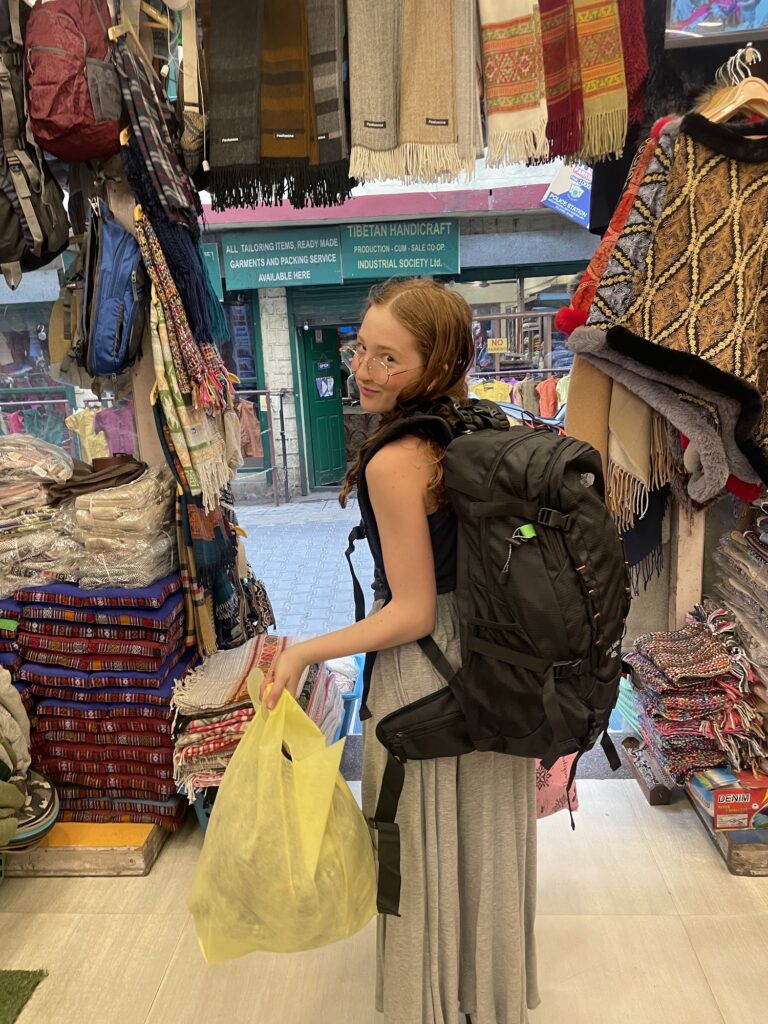
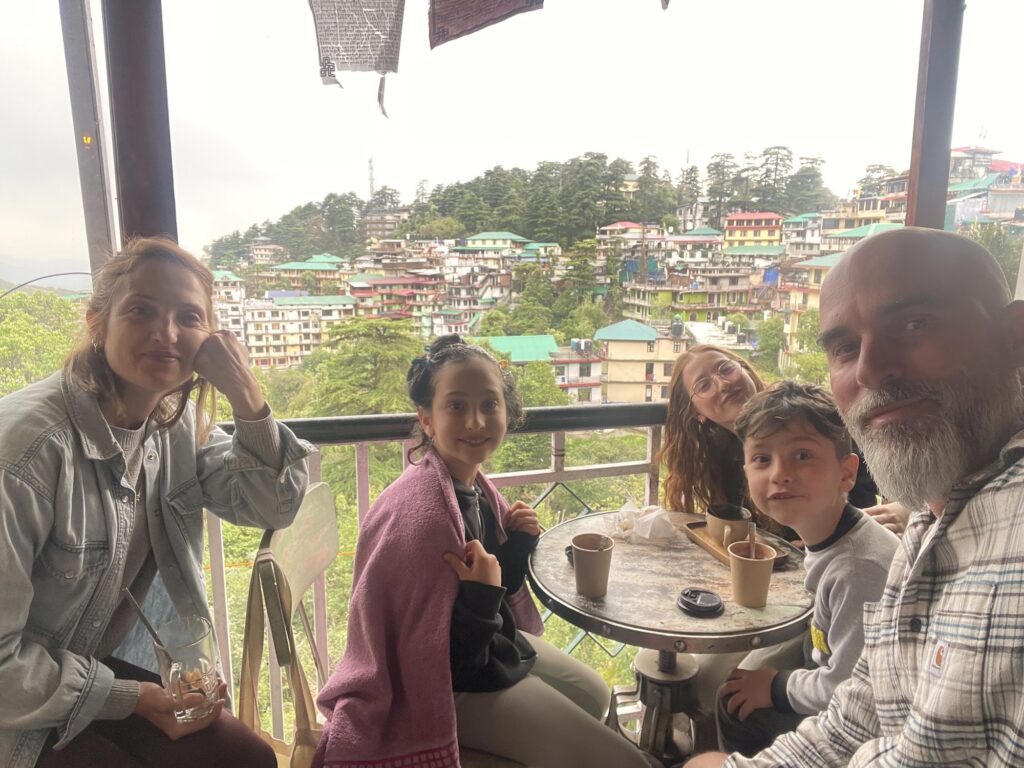
We’d heard so much about it beforehand, under all its nicknames: the backpacker village, the community center… And indeed, it really is a place unlike any we’ve seen (even for those of us who’d been there 20 years ago), and there’s no doubt the kids felt at home the moment we arrived. Restaurants and shops with signs in several languages, waiters who chat with travelers from all over the world, dozens of backpackers in sandals playing cards on every corner – it feels like a little travelers’ village that sprang up among the Himalayas.
We were less keen on the backpacker-bubble vibe, after all we traveled halfway around the world to experience something different, but the kids’ comfort there, and the confidence to walk around on their own, go to restaurants or go shopping, were worth a lot. It allowed us, for example, to go to yoga while they happily stayed on their own at the restaurant next door (Shamayim), ordering food for themselves and playing cards with the crowd… and that’s definitely not nothing 🙂
Nature: beyond that, Dharamsala is set in the unbelievably beautiful scenery of the Himalayas, which creates a special atmosphere and lets anyone who doesn’t just want to sit in cafés head out on stunning day hikes within walking distance, or on tougher treks. We’ll get to that too.
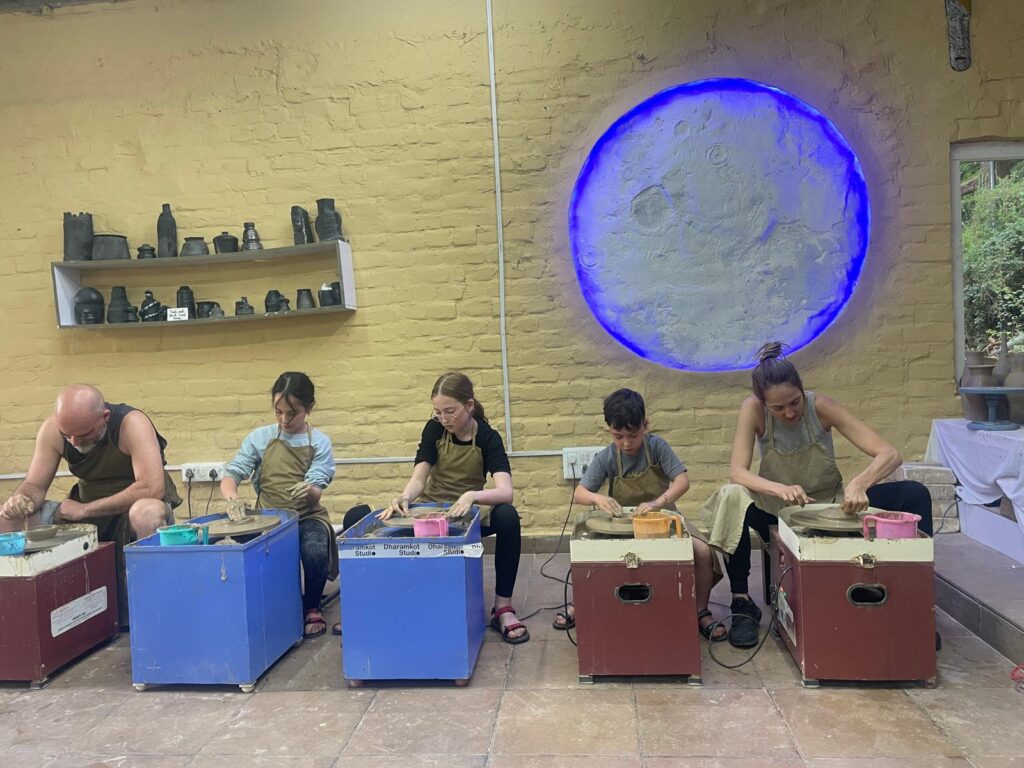
Workshops and activities: there’s a reason Bhagsu earned the nickname “the community center”. On its two streets you’ll find dozens of workshops and activities for every age: yoga of every kind (which we did without the kids), jewelry making, macramé, painting, ceramics, dance and what not. Everything is very accessible and cheap.
We fell in love with a ceramics studio on the upper path, away from the busy street, a beautiful place overlooking the mountains, and we went every day, each time for a different workshop: Dharamkot Studio. We did a family ceramics workshop, a Tibetan painting workshop and more, and still didn’t reach the cost of a single payment for our daughter’s ceramics class back home… a treat.
If you asked the kids, they’d have stayed in Dharamkot even longer than the week and a half we spent there. But after celebrating a holiday dinner with fellow travelers, we moved on. One thing’s for sure: they learned a new card game from the backpackers that stayed with us the whole trip, and they’re definitely ready for their own backpacking trip one day 🙂
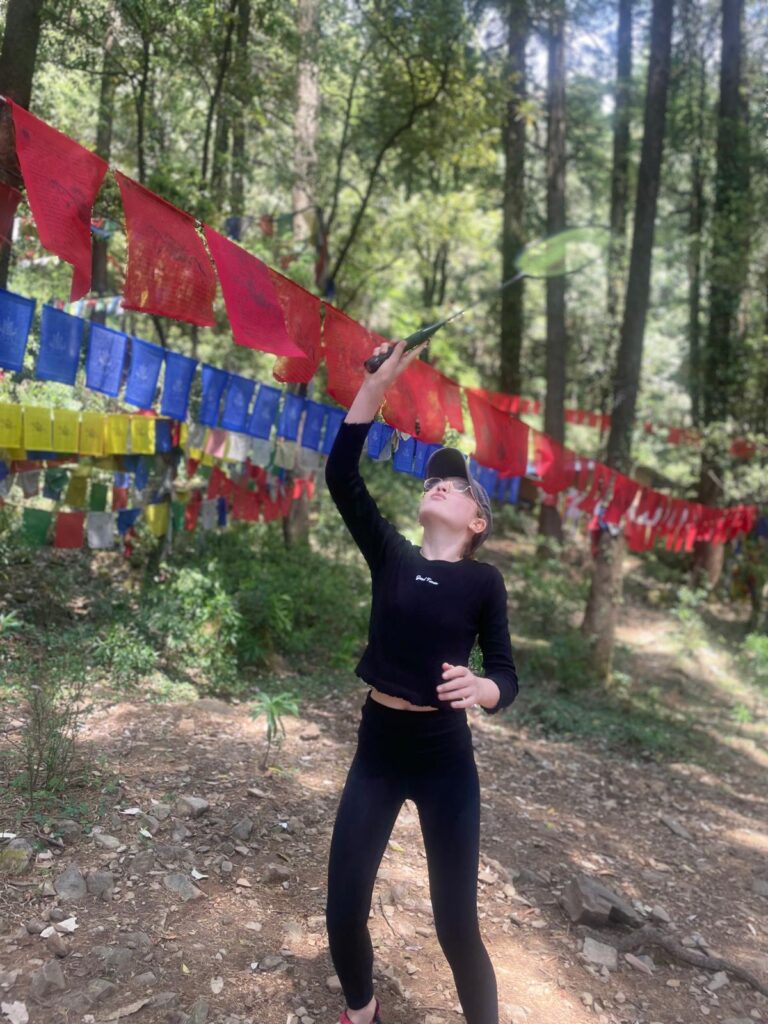
Where we stayed: we chose to stay on the edge of Dharamkot, right at the entrance, because we really were trying to get a little away from the busy backpacker part. We stayed at a lovely new guesthouse: Luxeevista – By Navodayans (if the backpacker bubble isn’t for you, like us, just walk five minutes off to the side and it’s all quiet).
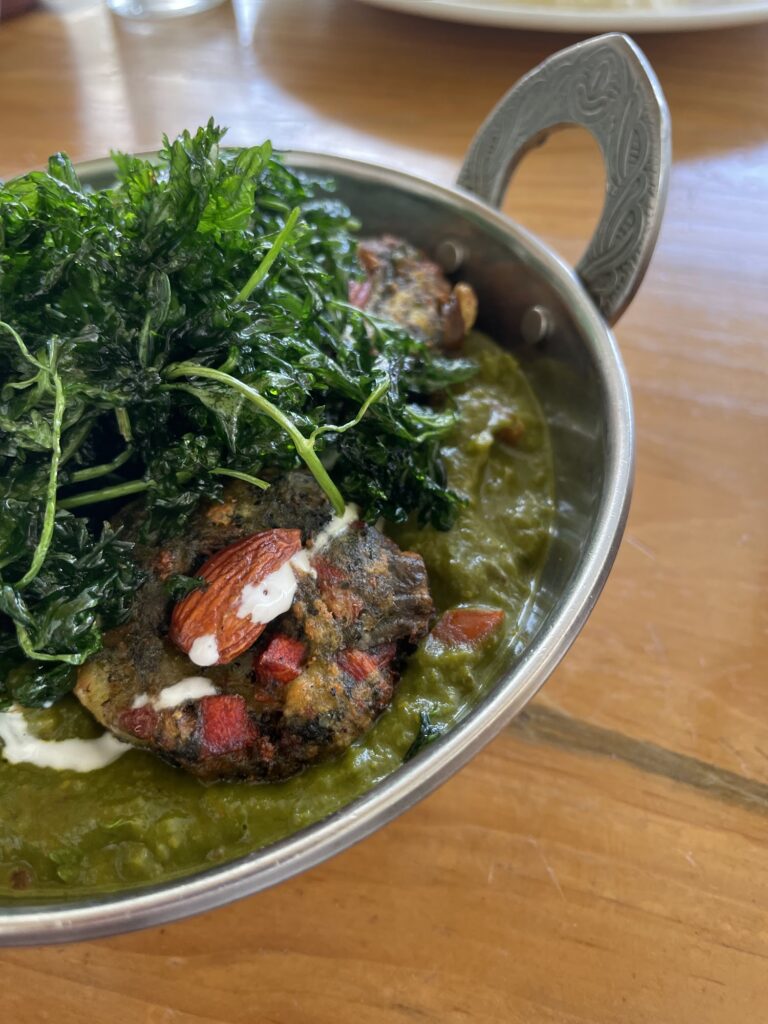
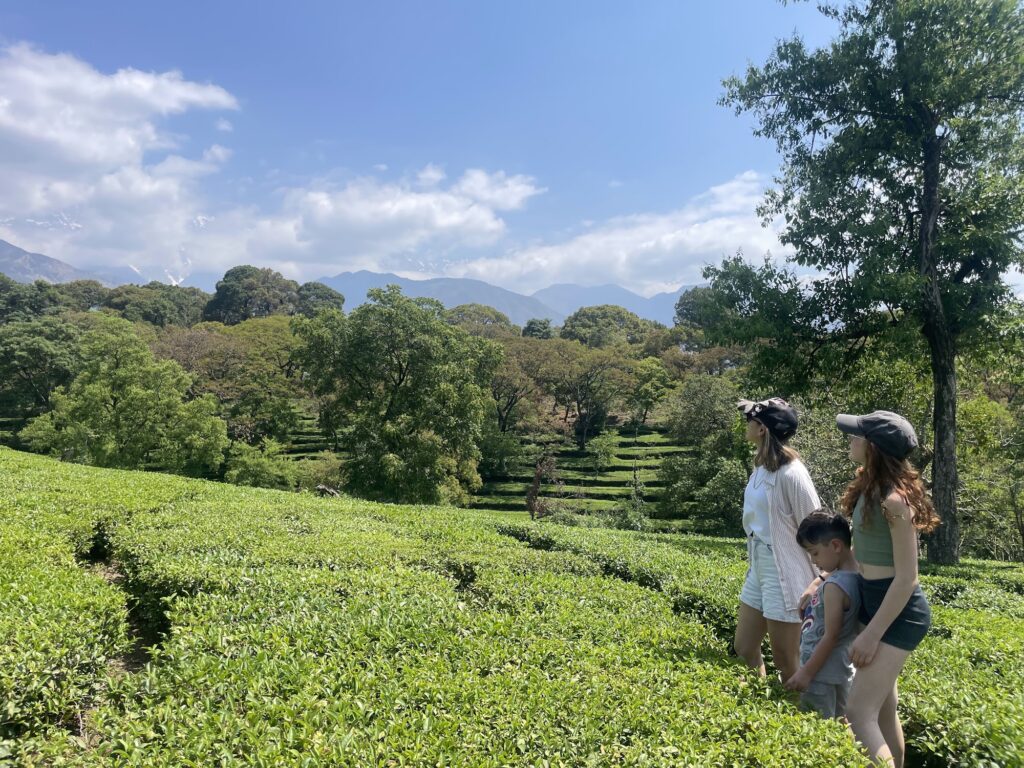
Dharamkot and Bhagsu are the two villages above Dharamsala, and from there you can head out on countless hikes. A day trip to the local tea gardens: just arrange a local driver to take you for the whole day. It’s a fairly well-known route through several villages and magical tea gardens.
The Triund trek – our highlight
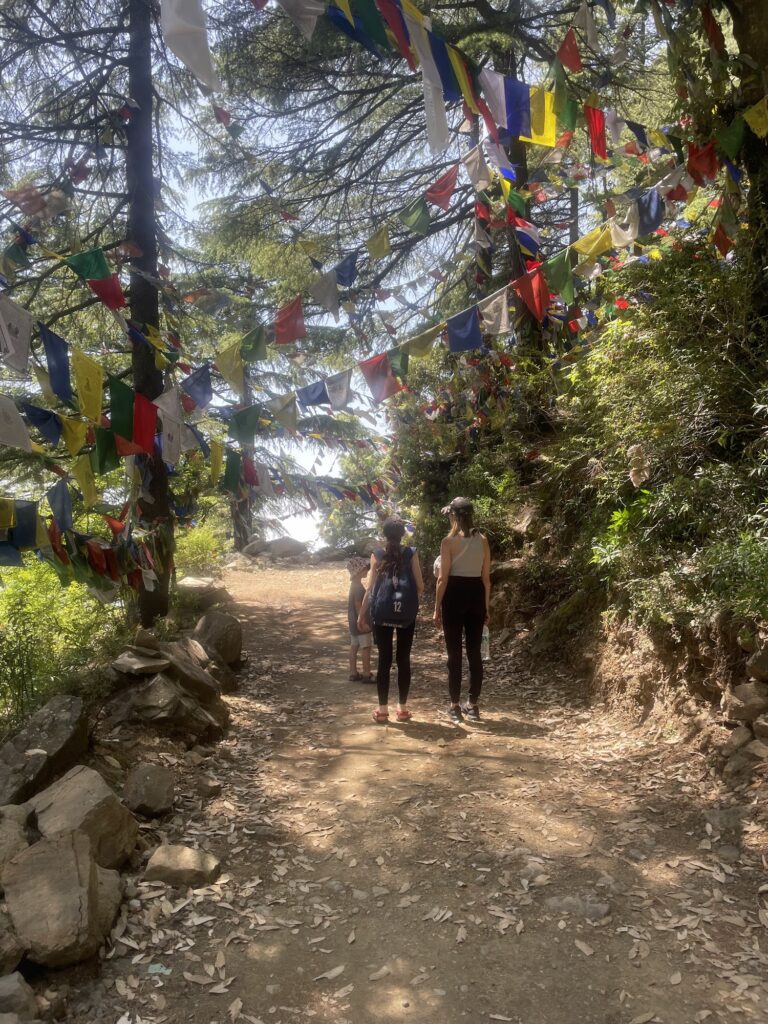
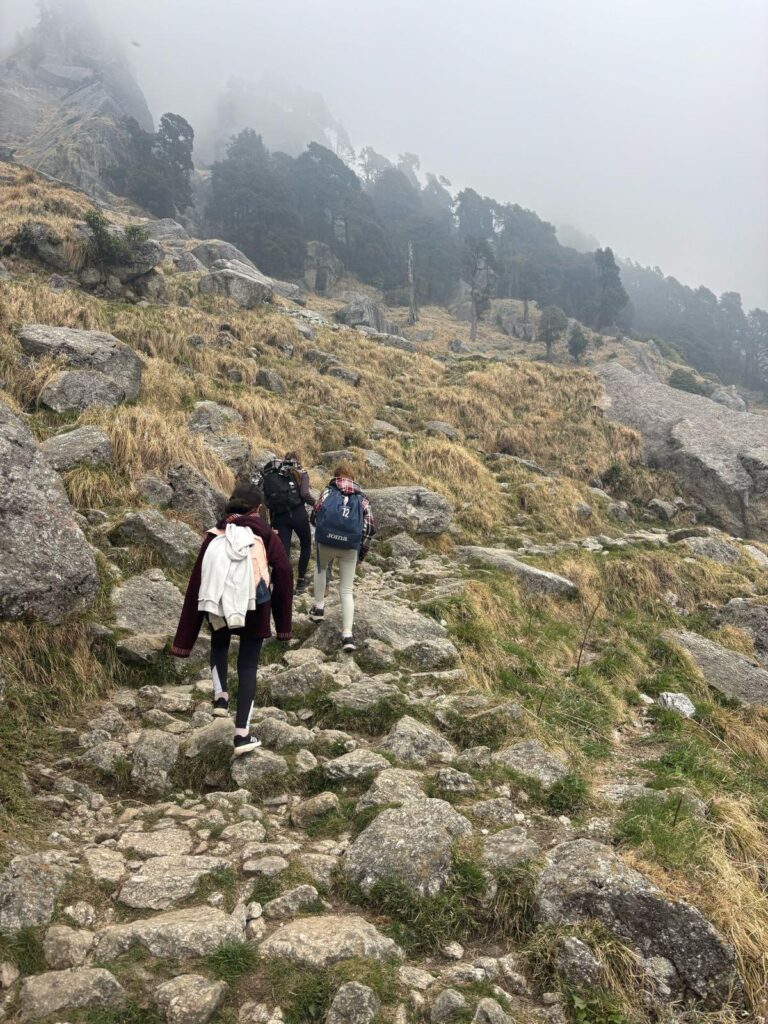
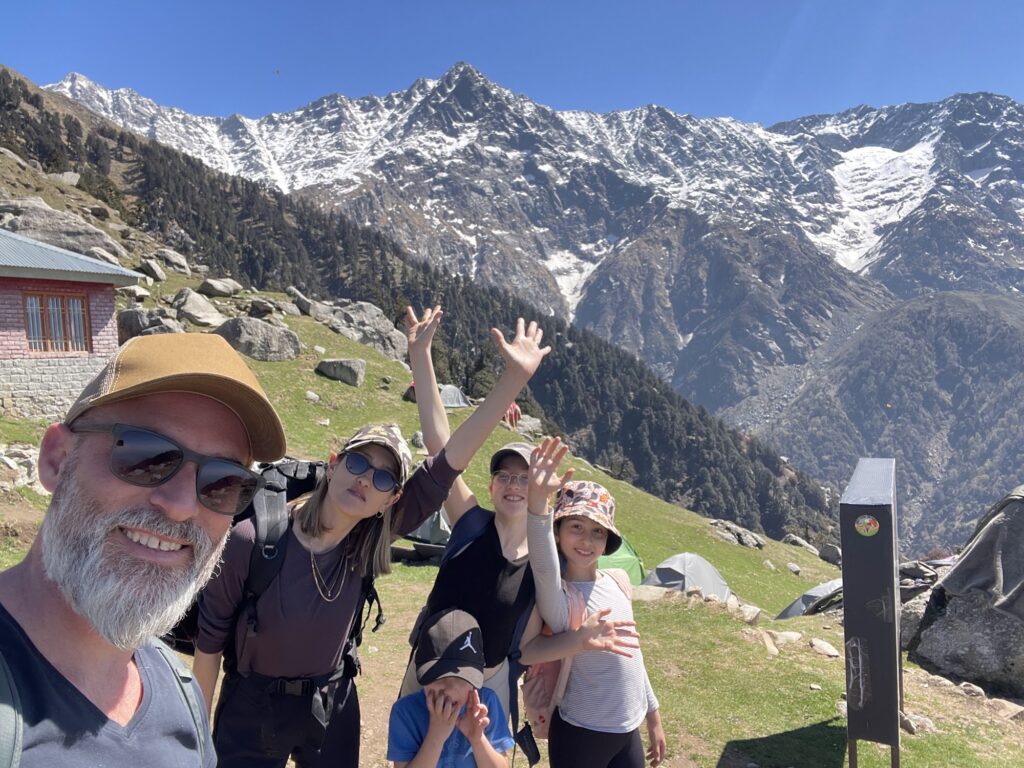
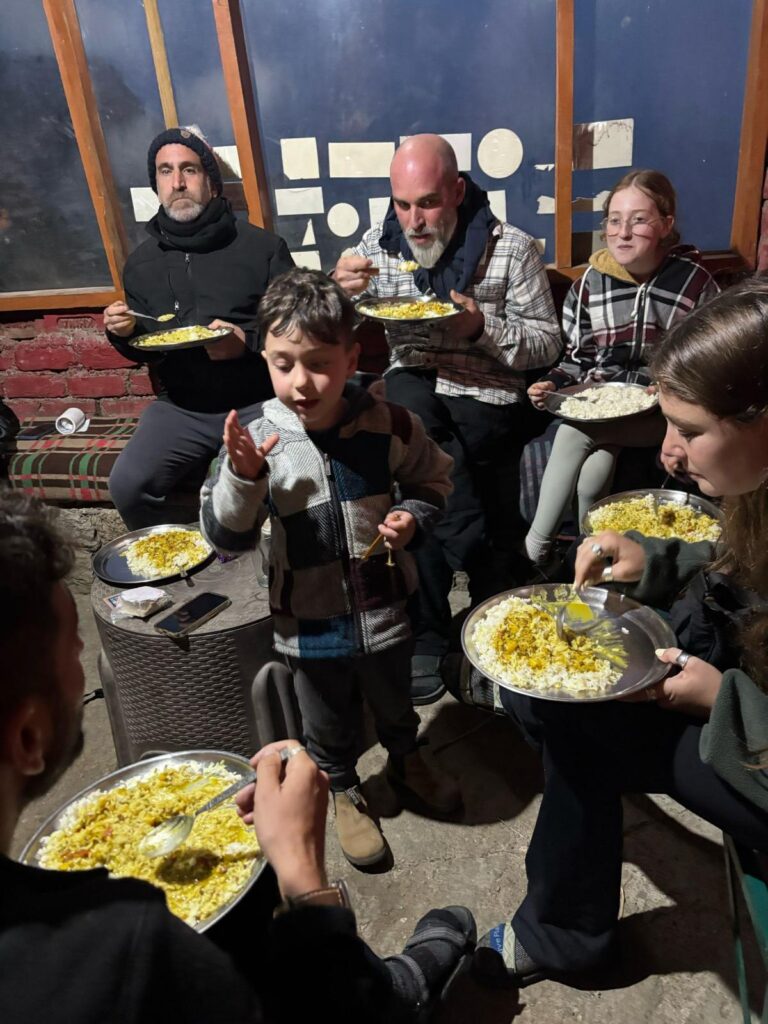
The trek up Triund (about 2,850 m) was one of the most meaningful experiences of our whole trip. Book a night on the mountain in advance (don’t expect a hotel 🙂 it’s very basic – a small hut with a dinner of dal and rice. After 6 hours of climbing (depending on your kids’ ages), that dinner was perfect, and it’s all worth it when you wake up for sunrise to one of the most beautiful views you’ll ever see.
* Tip: bring bedding or something to cover yourself with, and toilet paper, since there are no restroom facilities up there.
McLeod Ganj
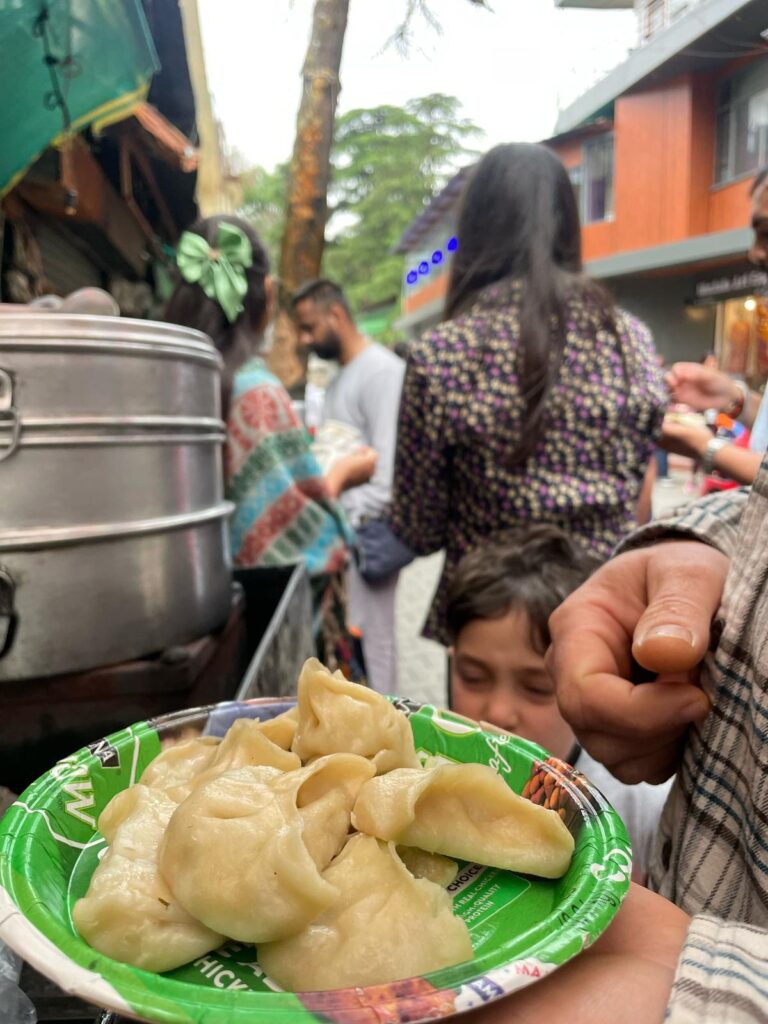
McLeod Ganj is a magical town, a blend of Buddhist culture and the Tibetan people, home of the Dalai Lama, full of markets and great food. You have to eat momos of every kind on the street, and the famous Bhagsu cake.
There’s a lot to do in the area and a lot to write about, but on this trip in particular, the magic of India is not always looking for the next destination, what we’re doing today or tomorrow. There’s something about doing nothing, connecting to the energy of the place, and that way also to ourselves.
After 10 days around Dharamsala we were looking for somewhere quieter and more secluded, and set out for a small village near Manali.
Naggar: the real India in all its glory
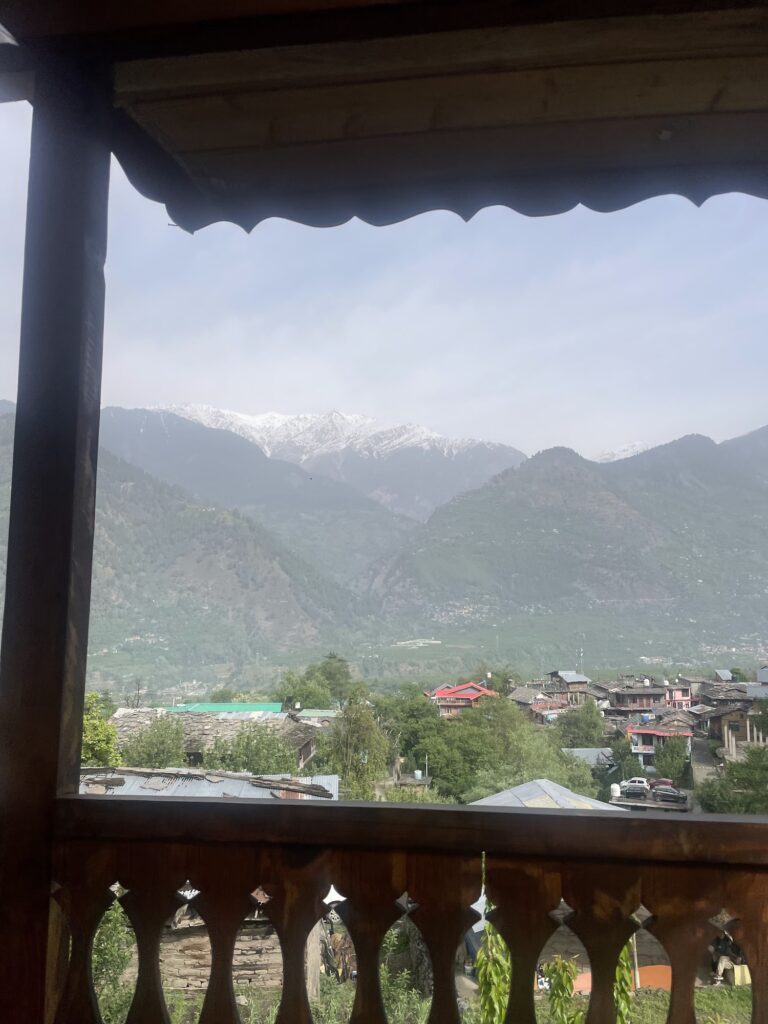
After the busy backpacker scene we wanted to unplug and reconnect with nature and with each other, and that’s how we ended up somewhere amazing, 40 minutes from Manali. Naggar is a small village without much to do: lots of nature all around, and above all waking up every morning to the fresh air and breathtaking view of the snowy Himalayas (in April).
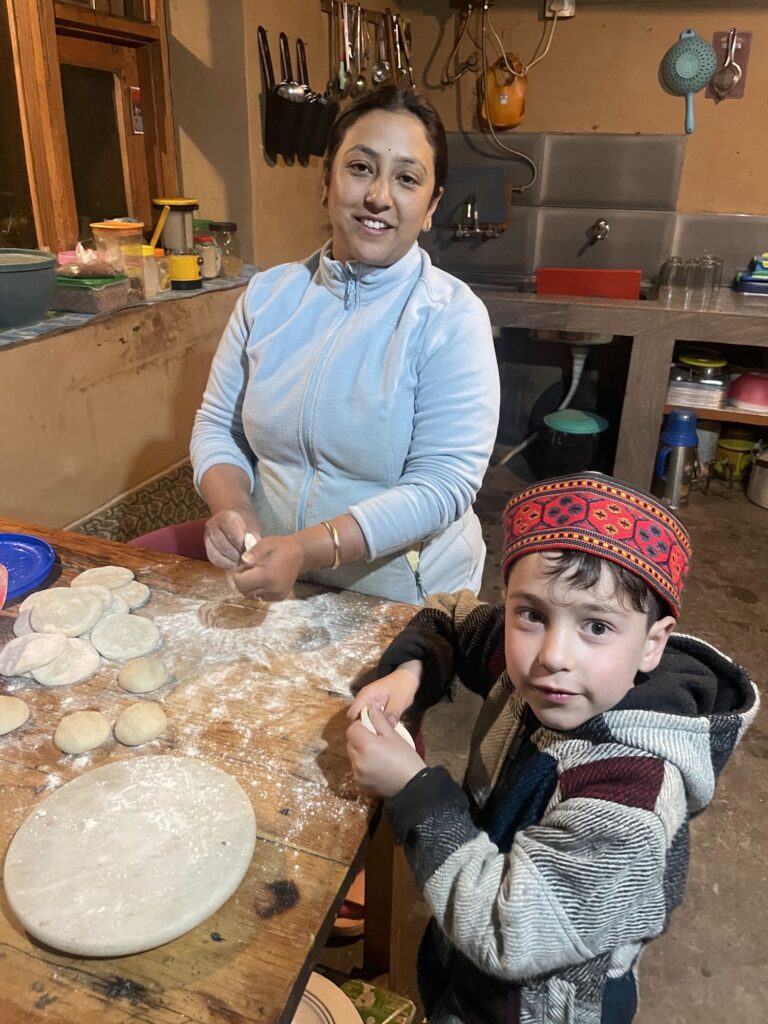
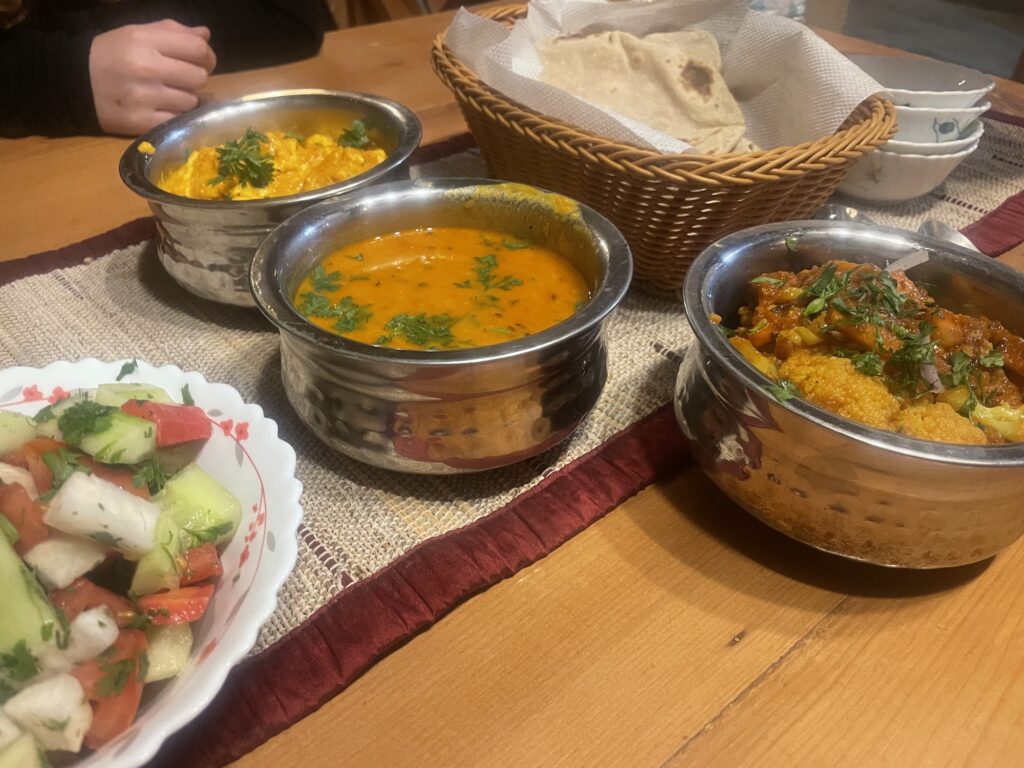
We stayed at an amazing place: Himalayan Brothers Adventure (you won’t find it on Booking or Google). Message them directly on WhatsApp to arrange: +91 821 955 6099. A lovely couple who set up the guesthouse and a travel agency, and they can help with everything: heading out on loads of nature trips around the area, taxis into town, and food they cook on site. We took the family room, and the owner cooked us the best breakfasts and dinners we ate in India, including a one-on-one cooking class where we really learned the secrets of Indian cooking.
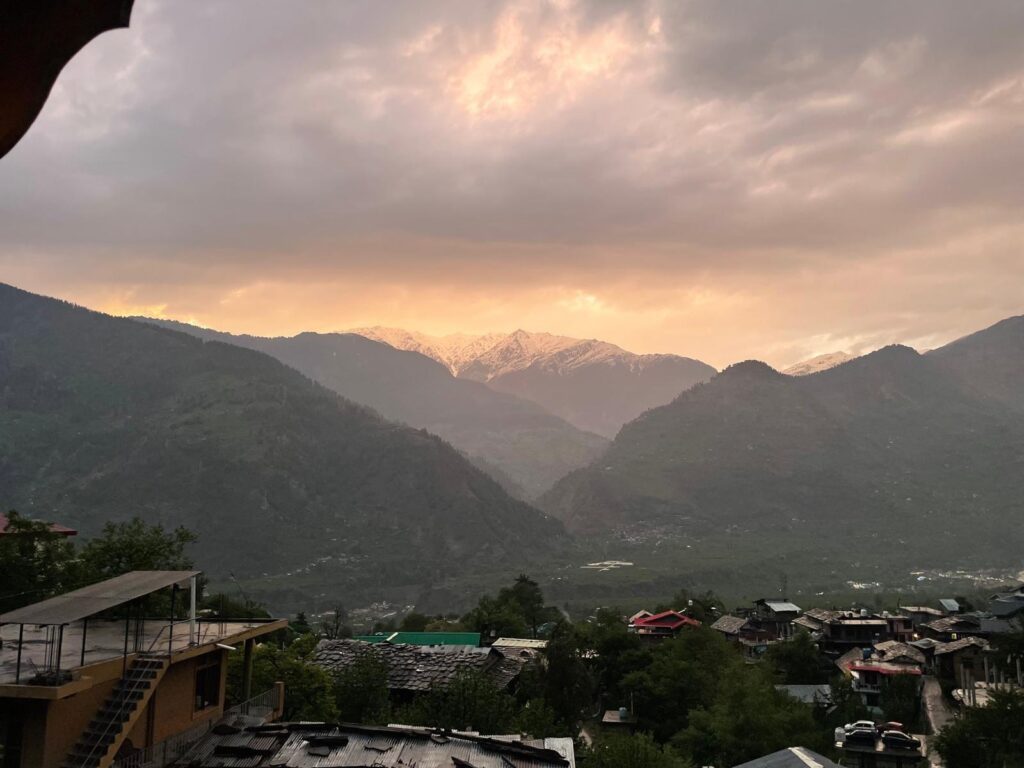
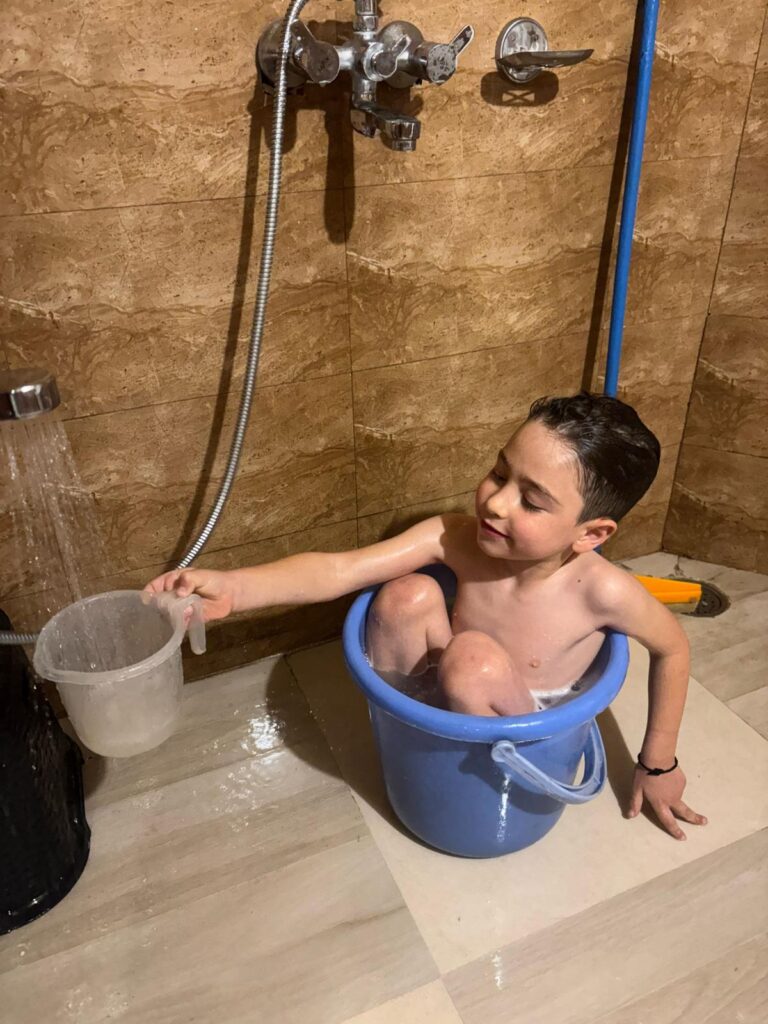
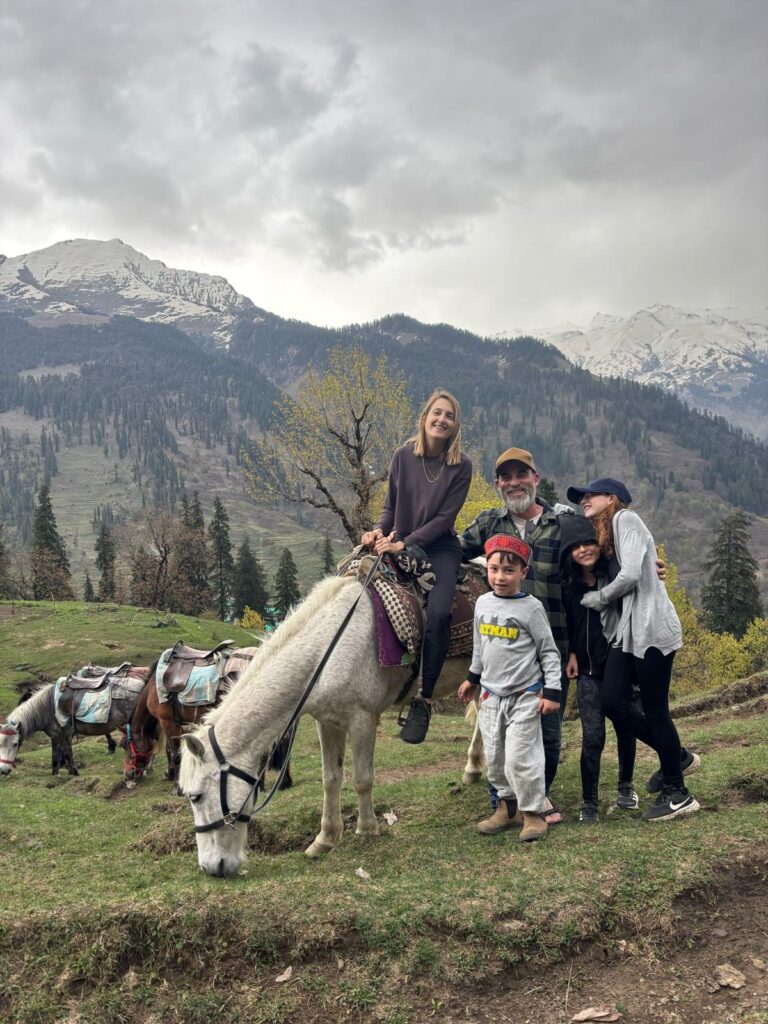
From there we took several trips to Manali and around: horse rides, jeep tours and more. Naggar has a few restaurants, cafés and a small grocery store, and quiet, welcoming locals. Perfect for families. The experience of a simple bucket shower (but the cleanest, and with hot water) is sometimes worth more than any hotel.
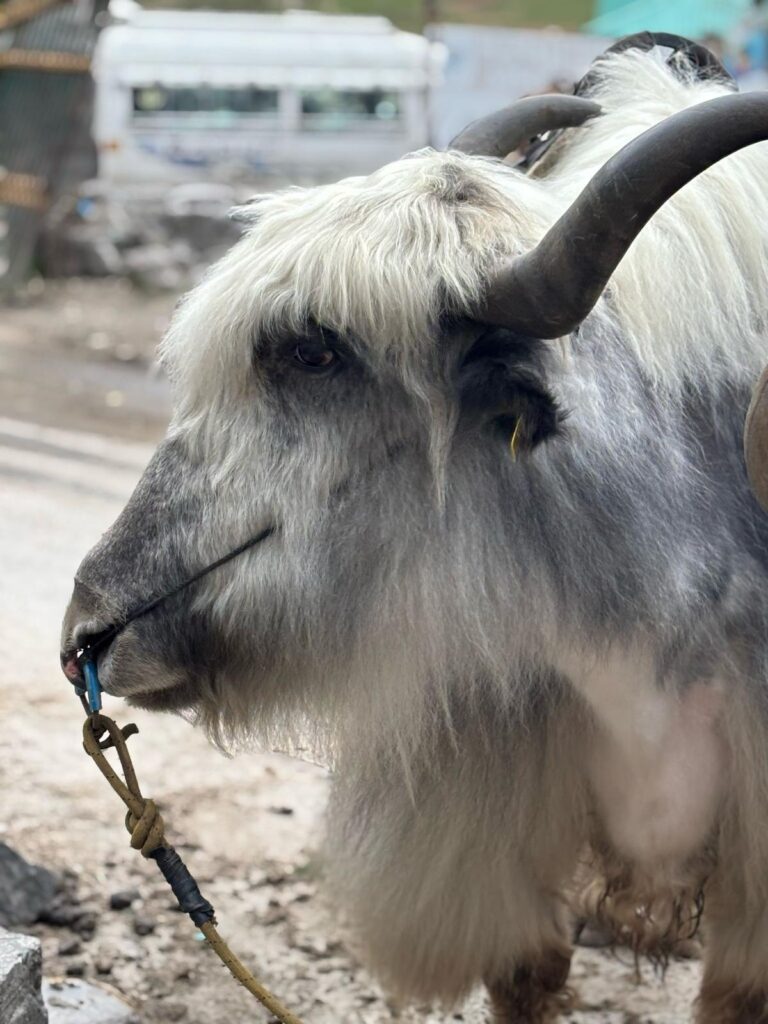
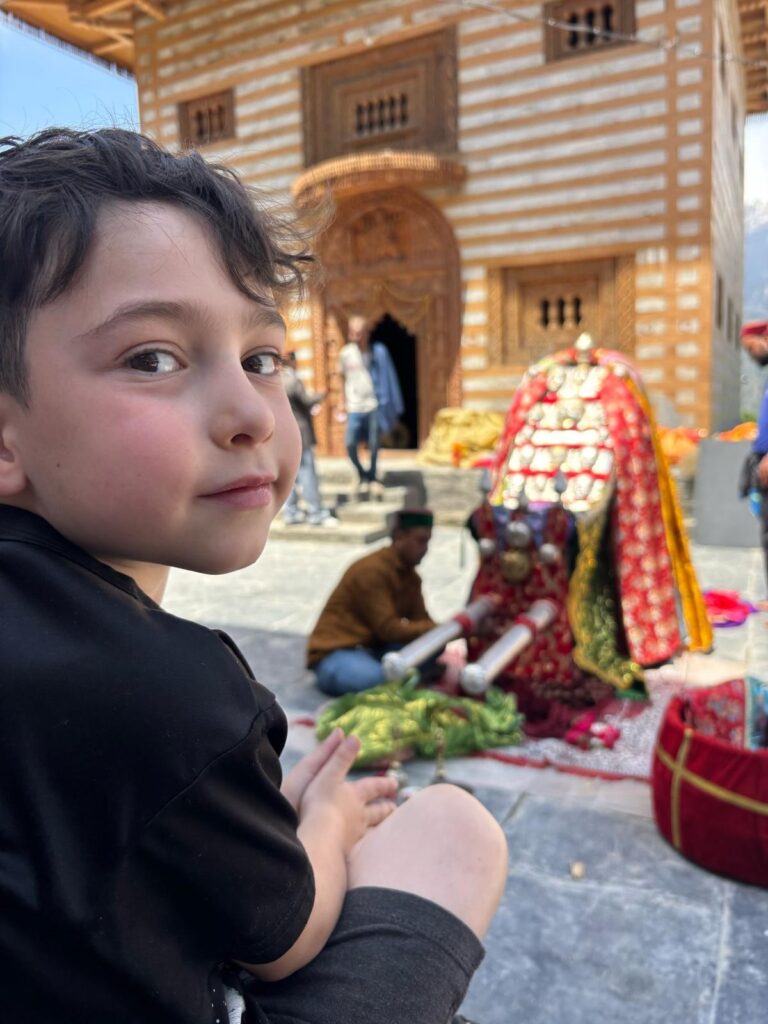
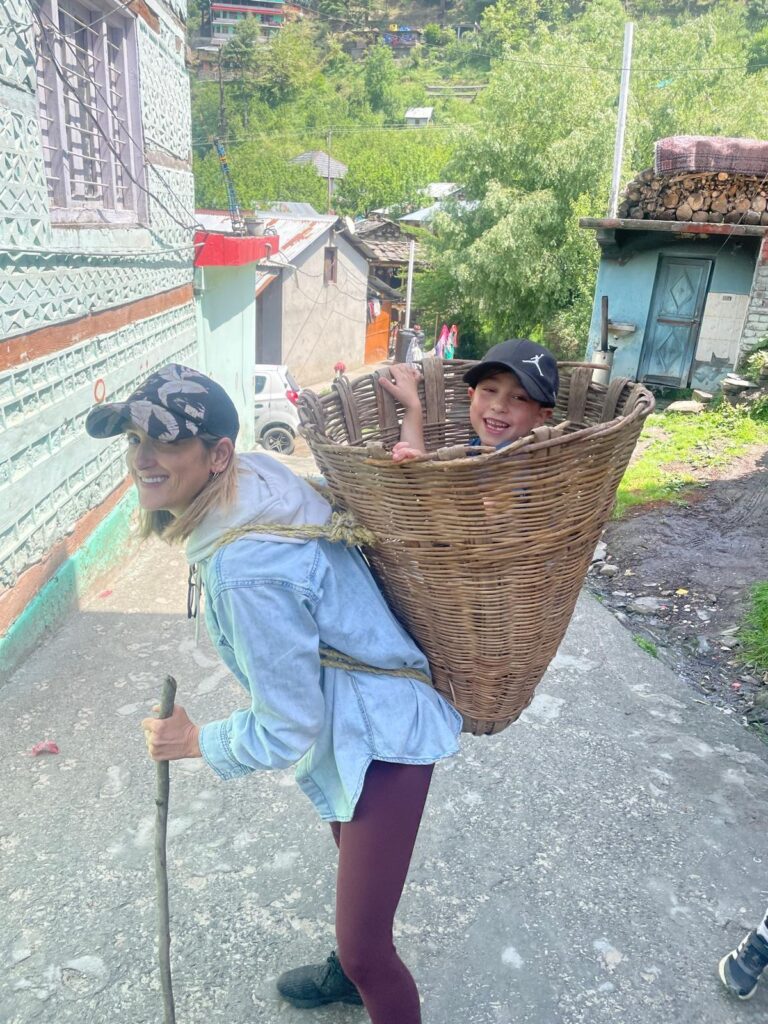
Here too we could write endlessly about our time in Naggar – the photos (and the yak we met up close) speak for themselves.
Naggar to Delhi: a pampering finale
You start to feel the end coming. We knew from the start that Delhi would be our finale, and after a month of backpacking, where even when we really wanted to there was no way and nothing to spend money on, because everything is so cheap :), we chose to treat ourselves to almost the very best India has to offer…
We arrived after a whole, tough (very tough) night drive. We thought it might be better than 12 hours in a private taxi. There’s no real airport option between Manali and Delhi, and we didn’t want to stop over on the way. Having learned the hard way: we only recommend daytime drives.
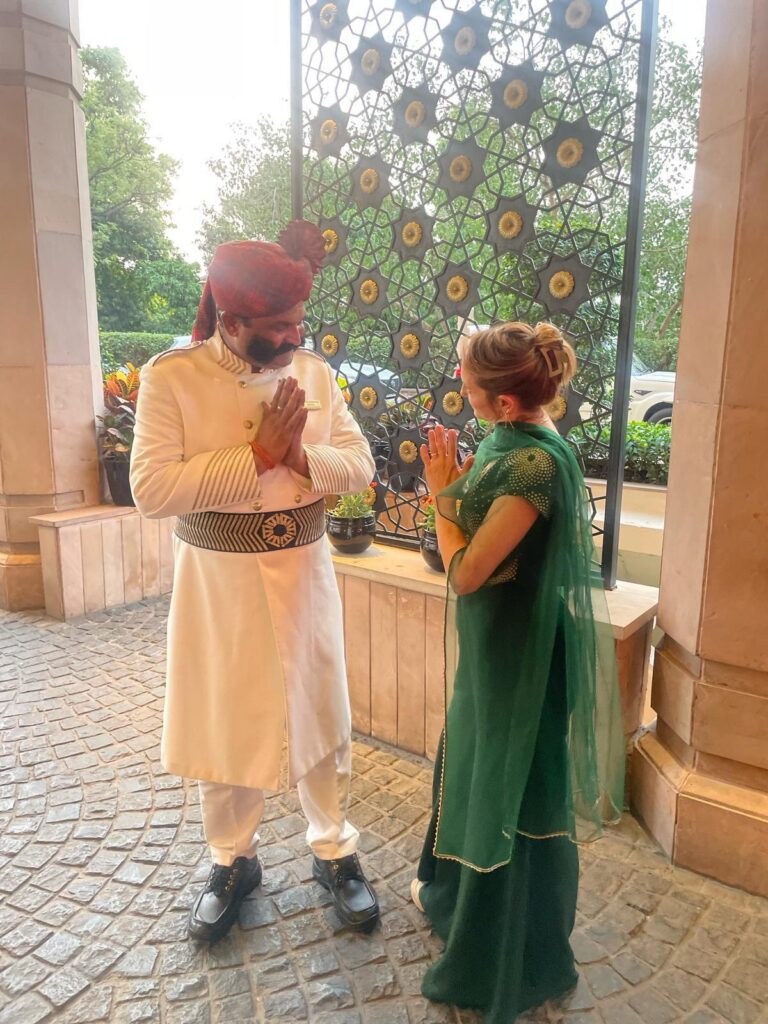
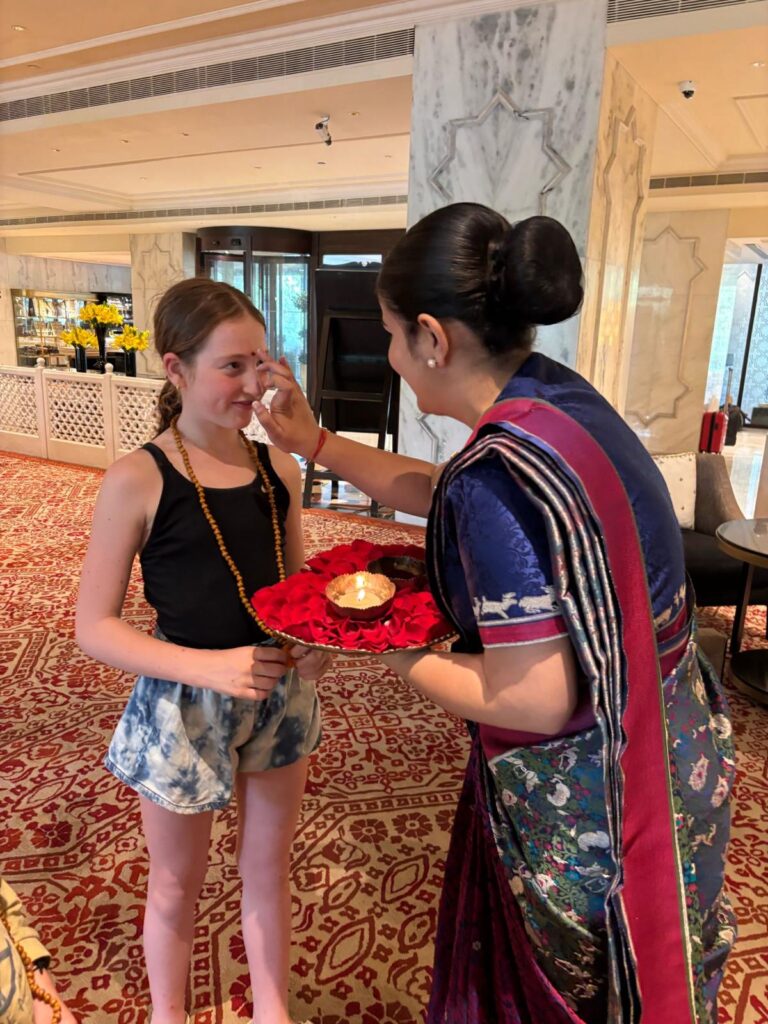
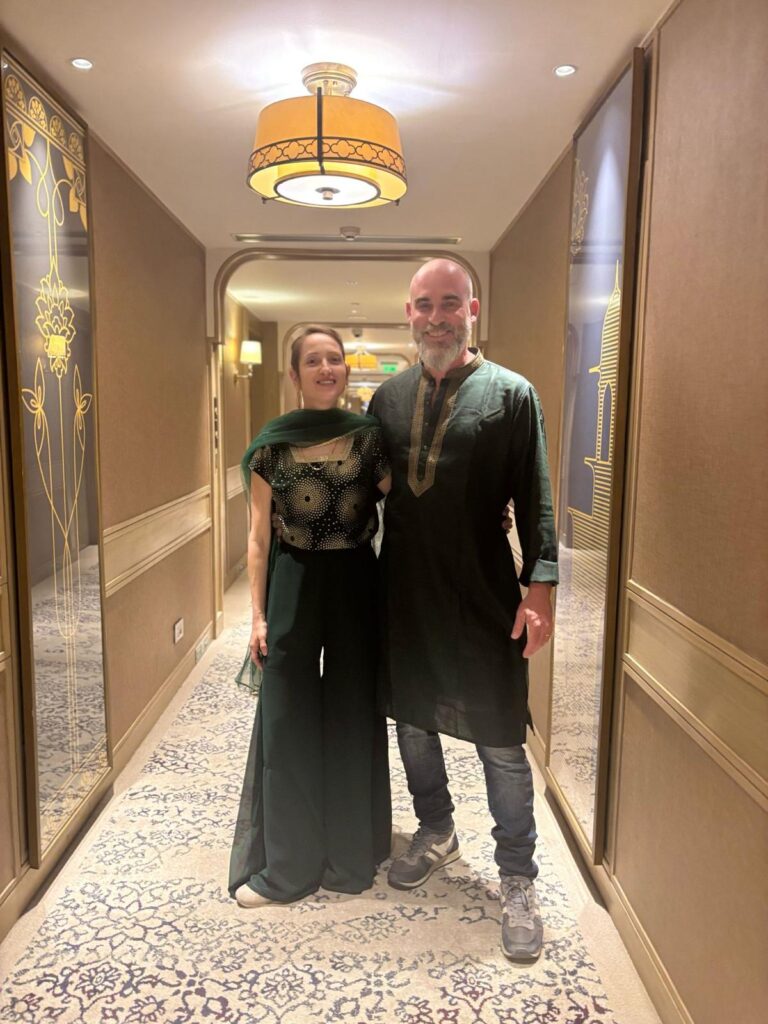
We chose to treat ourselves at one of the best hotels we’ve ever experienced anywhere: Taj Mahal, New Delhi. It’s hard to explain the experience here. We arrived in the ragged clothes of a month on the road to indescribable luxury, royal service the way only India knows how, amazing food – a once-in-a-lifetime feeling, for the price of a weekend getaway. (You can imagine how the kids, who a week earlier were showering with a bucket… were over the moon. Just how we always like it – a bit of both, a bit of everything.)
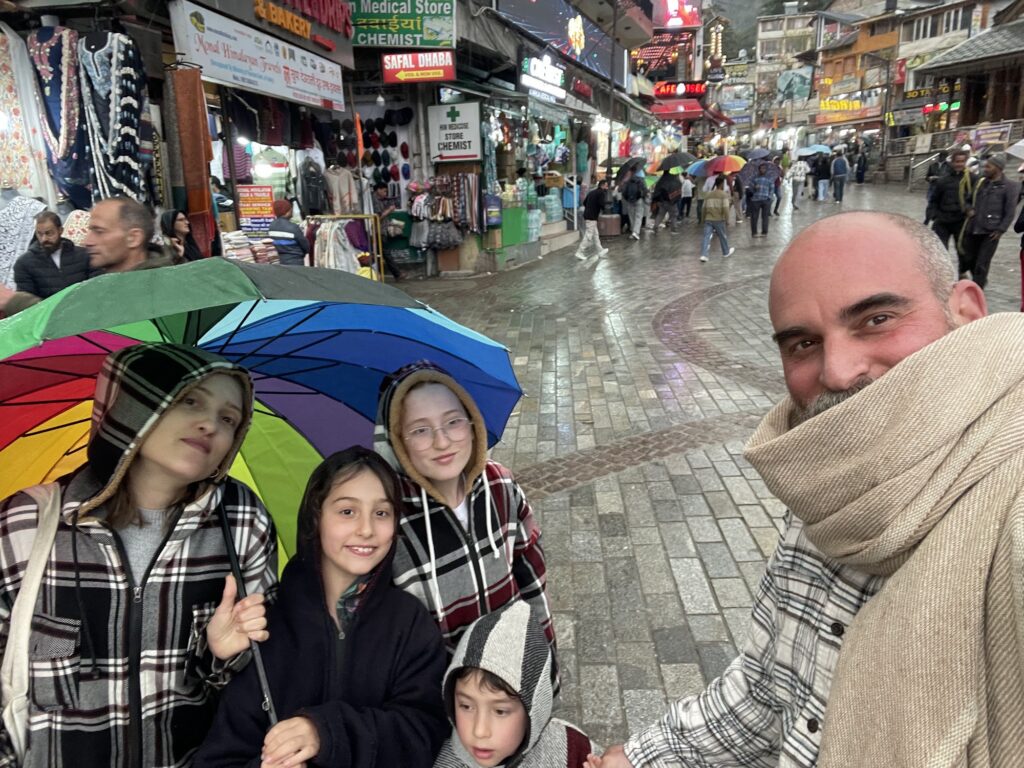
In Delhi we relaxed by the pool, ate wonderfully, did a little shopping at a mall in New Delhi, a quick hop to the Main Bazaar, the Jai Hind light show (watch the times and the traffic), Akshardham Temple, and lots and lots more to see and do – all up to you, of course.
Delhi – home. With a sack full of experiences and a sense of perspective that touched all of us, and a little of India’s spirit, which has stayed with us to this day.
A few more tips for India with kids:
- A pampering first night: a good hotel near the airport in Delhi makes landing in India much softer. Save Delhi’s chaos for the end.
- No more than 4 moves in a month: distances in India are huge, and a 12–13 hour drive is common.
- A recommended taxi driver: for getting between destinations, without compromising on safety or the type of car. And from experience: daytime drives only, not at night.
- Money: bring US dollars and exchange them locally. There aren’t many ATMs or places to withdraw cash, especially in the mountain villages, and many small places only take cash.
- Let the trip lead: book the first few nights in advance, and from there leave room to stop, stay and decide as you go.
Where did we stay in India?
All the places we mentioned along the way, gathered here so you don't have to scroll back up 🙂
Andaz Delhi, by Hyatt
Delhi – a soft-landing first night: 5 minutes from the airport, wonderful food and amazing hospitality.
See the place →Pride Hotel And Resort Rishikesh
Rishikesh – a comfortable hotel in Upper Tapovan, in a good, not-too-busy spot. A nice balance for the start of the trip.
See the place →Luxeevista – By Navodayans
Dharamkot – a lovely new guesthouse at the entrance to the village, five minutes from the backpacker bustle.
See the place →Himalayan Brothers Adventure
Naggar – a family guesthouse and travel agency, with the best food we ate in India. Not on Booking, arrange via WhatsApp.
Message them on WhatsApp →Taj Mahal, New Delhi
Delhi – the finale: one of the best hotels we've experienced anywhere. Once in a lifetime, for the price of a weekend getaway.
See the place →Looking for something else in India? Search hotels on Booking
Full disclosure 🙂 Some of the links here are affiliate links. If you book through them we earn a small commission, at no extra cost to you, and it helps us keep writing and sharing.
Before you start planning
When to go to North India? | Our seasons calendar
Two regions, two worlds: the hot plains of Delhi and Rishikesh, and the mountains of Dharamsala and Manali. Pick a region and tap a month.
All the months in words
When is the best time to visit North India?
For a trip that combines Delhi and Rishikesh with the mountains of Dharamsala and Manali, the best months are March–April and October–November. For the mountains alone, May and June are excellent, and for Delhi and Rishikesh alone, October to March.
Is it worth visiting North India in July–August?
Less recommended: July–August is monsoon season. Delhi and Rishikesh are hot and humid (34°–35°) and rainy, and Dharamsala gets around 900 mm of rain a month, with landslides and blocked roads.
What's the weather like in North India in April?
We traveled in April: Delhi and Rishikesh are already hot (around 36° by day), while the mountains of Dharamsala and Naggar are very pleasant (around 26°), green, and the peaks are still snowy. Nights in the mountains are cold, so bring layers.
Delhi & Rishikesh
- January (possible, 21° by day, 19 mm rain): cool mornings and evenings, with occasional fog and air pollution in Delhi.
- February (recommended, 24° by day, 20 mm rain): pleasant and dry, a good time for Delhi and Rishikesh.
- March (recommended, 30° by day, 15 mm rain): warm and pleasant, and Holi, the festival of colors, usually falls in March.
- April (possible, 36° by day, 10 mm rain): getting hot in Delhi. We were here in April: mornings and evenings were pleasant.
- May (less suitable, 40° by day, 25 mm rain): very hot in the plains, better to escape to the mountains.
- June (less suitable, 39° by day, 70 mm rain): peak heat, and the monsoon is approaching.
- July (less suitable, 35° by day, 230 mm rain): monsoon season: heavy rain and humidity.
- August (less suitable, 34° by day, 250 mm rain): the monsoon at its peak.
- September (possible, 34° by day, 120 mm rain): the monsoon eases, but it's still hot and humid.
- October (recommended, 33° by day, 15 mm rain): one of the best months: dry and pleasant after the monsoon. Diwali usually falls in Oct–Nov.
- November (recommended, 28° by day, 5 mm rain): pleasant and dry, but Delhi's winter air pollution begins.
- December (possible, 23° by day, 8 mm rain): pleasant days and cold nights. Fog and air pollution in Delhi.
Dharamsala & Manali (the Himalayas)
- January (less suitable, 15° by day, 100 mm rain): cold, with snow on Triund and in the high villages.
- February (less suitable, 16° by day, 120 mm rain): still winter in the mountains: cold and rainy.
- March (possible, 21° by day, 110 mm rain): spring arrives, but the nights are cold and it still rains.
- April (recommended, 26° by day, 55 mm rain): perfect: green, clear and the peaks are still snowy. We traveled here in April.
- May (recommended, 30° by day, 60 mm rain): one of the best months in the mountains, just when the plains are scorching.
- June (possible, 30° by day, 230 mm rain): warm, but the monsoon arrives at the end of the month.
- July (less suitable, 26° by day, 950 mm rain): heavy monsoon: Dharamsala is one of the rainiest places in India. Landslides and blocked roads.
- August (less suitable, 25° by day, 920 mm rain): heavy monsoon, not the time for treks.
- September (possible, 26° by day, 330 mm rain): the rains ease toward the end of the month.
- October (recommended, 24° by day, 50 mm rain): clear skies and perfect views for trekking.
- November (recommended, 20° by day, 15 mm rain): cool and dry, with great visibility. The nights are already cold.
- December (possible, 17° by day, 50 mm rain): cold, with occasional snow on the peaks.
And here are a few more great destinations
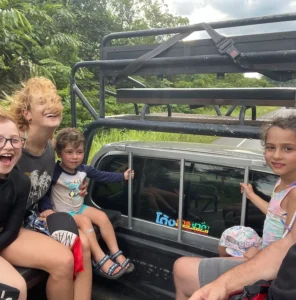
Shortcuts
The booking tools we actually use on our family trips: hotels, car rental, flights and an eSIM that saves on roaming. Simple, tried and tested.
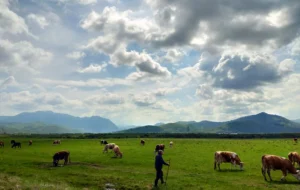
Romania
A family road trip loop through Romania: Sibiu, Turda salt mine, Sighișoara, Bran and Brașov. Kid-friendly, affordable and full of nature.
Vietnam
Our month in Vietnam: Hanoi, Sapa, Hoi An, Nha Trang, Da Lat, Ho Chi Minh City and Phu Quoc. Hotels, food, seasons and practical tips.